

New Home Mortgage: First-Time Buyer Guide for 2023 – Buying a first home often starts with a feeling, not a calculation.
You may see a new-build home, imagine the rooms, and then meet the numbers. The mortgage is where that hope becomes tested. Income, deposit, credit history, lender criteria, legal timing and future costs all begin to matter.
A new home mortgage is not just a loan for a property. It is a structured decision about affordability, risk, timing and long-term repayment.
This guide explains the practical steps first-time buyers need to consider in 2023 when buying a new home.
At a Glance
A new home mortgage helps you buy a property by spreading the cost over a set term.
Before reserving or offering on a property, first-time buyers should understand:
- How much deposit they have
- How much they may be able to borrow
- Whether their income meets lender affordability checks
- How their credit file may affect the application
- What a Decision in Principle means
- How fast can new-build purchases move
- Which mortgage type suits their budget
- What extra costs sit outside the mortgage
- Whether shared ownership may be suitable
- Why legal advice should start early
A first-time buyer should not only ask, “Can I get a mortgage?”
They should also ask, “Can I manage this mortgage safely?”
What is a New Home Mortgage?
A new home mortgage is a residential mortgage used to buy a property you plan to live in.
For many first-time buyers, this may be a new-build home, a newly converted property or an existing property that is new to them. The mortgage lender provides part of the purchase price, and the buyer provides a deposit.
The mortgage is then repaid over an agreed term. Most residential buyers choose a repayment mortgage, in which each monthly payment covers interest and part of the loan principal.
The lender will assess whether the mortgage is suitable based on your income, outgoings, credit history, deposit, property type and future affordability.
If you are buying your first property, our first-time buyer mortgage guide explains the wider steps in more detail.
Why Affordability Matters Before the Property Search
A first home should be affordable, not the asking price.
A lender does not only look at salary. It will usually consider regular income, debts, credit commitments, dependants, spending patterns and the mortgage term.
This matters because two buyers with the same income may receive different borrowing outcomes. Deposit size, credit conduct and monthly commitments can change the result.
Before viewing homes, it can help to estimate what may be possible using a residential affordability calculator.
This does not replace mortgage advice. However, it can help you understand the gap between the home you want and the mortgage you can afford.
What is a Decision in Principle?
A Decision in Principle is an early indication from a lender.
It may also be called:
- Agreement in Principle
- Mortgage in Principle
- Approval in Principle
- Mortgage Promise
A DIP gives an estimate of how much a lender may be willing to lend, based on the information provided at that stage.
It is not a full mortgage offer. The lender can still change its decision after checking documents, reviewing the property and completing underwriting.
Even so, a DIP can help first-time buyers act with more confidence. Estate agents and builders may also ask for evidence that you can proceed before accepting an offer or reservation.
A good DIP should be treated as a starting point, not a guarantee.
Deposit Size and Loan-to-Value
The deposit is one of the most important parts of a new home mortgage.
Many first-time buyers look at 5% deposit mortgages. This means the mortgage covers up to 95% of the property’s value, subject to the lender’s criteria.
This is known as the loan-to-value, or LTV.
For example:
- Property price: £250,000
- Deposit: £12,500
- Mortgage amount: £237,500
- LTV: 95%
A larger deposit may reduce the LTV. This can provide access to more mortgage options and may improve the available rate.
However, the deposit should not use all available savings. Buyers also need funds for legal fees, moving costs, insurance, furnishings and possible changes after completion.
A mortgage should open the door to a home, not leave the buyer financially exposed once they move in.
Mortgage Rates and Product Choice
Mortgage rates were a major concern for first-time buyers in 2023.
The rate affects the monthly payment and the total interest paid over the mortgage term. However, the lowest rate is not always the best product.
A buyer also needs to consider:
- Product fees
- Valuation fees
- Early repayment charges
- Incentives from the lender
- Fixed or variable rate options
- Mortgage term
- Overpayment flexibility
- Portability
- Completion deadlines
A fixed-rate mortgage can help with budgeting because the payment stays the same for the fixed period.
A variable or tracker mortgage may track the lender’s rules or a broader benchmark. This may create flexibility, but it can also make monthly costs less certain.
First-time buyers should compare the whole mortgage, not just the headline rate.
You can use the quick mortgage calculator to estimate how repayments may change across different rates and terms.
Why New-Build Mortgages Need Careful Timing
New-build purchases can move differently from older property purchases.
A buyer may reserve a plot before the home is finished. In some cases, the developer may expect contracts to be exchanged shortly after the reservation.
This can create pressure.
The mortgage offer must remain valid long enough to reach completion. If the build is delayed, the buyer may need an extension or a new mortgage application.
This is why timing matters. A first-time buyer should check:
- Reservation deadline
- Exchange deadline
- Expected completion date
- Mortgage offer expiry date
- Whether the lender accepts the property type
- Whether incentives affect the lender’s valuation
- Whether the property has a recognised warranty
The practical question is not only whether the buyer can secure a mortgage. It is whether the mortgage fits the build schedule.
Speak to a Conveyancer Early
A conveyancer or solicitor handles the legal side of buying a property.
For a new-build purchase, this can include checking planning matters, roads, sewers, lease terms, management charges, warranties, incentives and the developer’s contract pack.
It is sensible to choose a conveyancer before or soon after reserving a property.
A developer may suggest a solicitor from its panel. This may help with speed, but the buyer should still feel comfortable that the solicitor is acting for them.
Legal work is not just paperwork. It is the buyer’s protection before they commit to the purchase.
Stamp Duty and First-Time Buyer Costs
Stamp Duty Land Tax rules can affect the total cost of buying a home in England and Northern Ireland.
When this blog was published in September 2023, temporary SDLT relief rules were in place. The temporary relief period ran from 23 September 2022 to 31 March 2025, according to legislation.gov.uk.
First-time buyers should always check their position before relying on a figure, especially if buying close to a tax change date. You can estimate costs using the Stamp Duty calculator.
Stamp Duty is only one cost. Buyers may also need to budget for:
- Conveyancing fees
- Mortgage arrangement fees
- Valuation costs
- Survey costs
- Removal costs
- Furniture and appliances
- Buildings insurance
- Contents insurance
- Service charges
- Ground rent, where applicable
- Reservation fees
- Snagging checks
A first home budget should include both the cost of buying and the cost of living in the home afterwards.
Shared Ownership as a Possible Route
Shared ownership may help some first-time buyers buy a share of a property and pay rent on the remaining share.
This can reduce the initial mortgage amount required. However, it is not always simpler.
Buyers should understand:
- The share being purchased
- Rent on the unsold share
- Service charges
- Lease terms
- Repair responsibilities
- Staircasing costs
- Resale restrictions
- Affordability rules
GOV.The UK provides guidance on shared-ownership homes, including buying, costs, repairs, buying more shares, and selling.
Shared ownership can be helpful for some buyers. However, it should be reviewed as a full housing cost, not just a lower deposit route.
Repayment or Interest-Only Mortgage?
Most first-time buyers choose a repayment mortgage.
With a repayment mortgage, each monthly payment reduces the mortgage balance and pays interest. If all payments are made, the mortgage should be repaid by the end of the term.
An interest-only mortgage works differently. The monthly payment only covers interest. The original loan remains outstanding and must be repaid at the end of the term.
For first-time buyers, lenders usually expect a credible repayment plan for interest-only borrowing. This means interest-only may not be suitable or available for many buyers.
The safest starting point is to understand how the debt will reduce over time.
Mortgage Term and Long-Term Cost
A longer mortgage term can reduce monthly payments.
For example, a 35-year term may look more affordable than a 25-year term. However, the buyer may pay more interest overall because the mortgage runs for longer.
A shorter term may reduce total interest, but monthly payments are usually higher.
This is where mortgage advice can help. The right term should balance monthly affordability with long-term cost.
A mortgage should be affordable now and make sense for the future.
New Home Insurance and Protection
A mortgage protects the lender’s position in the property. Insurance and protection can help protect the buyer’s position.
Buildings insurance is usually required when buying a home. Contents insurance may also be considered.
First-time buyers may also want to review life insurance, critical illness cover or income protection. This is especially important where mortgage payments rely on one income or a joint income.
You can read more about mortgage protection insurance before deciding what cover may be suitable.
Protection should not be treated as an afterthought. A home is often the largest financial commitment a person makes.
How a Mortgage Adviser Can Help
A mortgage adviser can help first-time buyers understand the difference between what looks affordable and what a lender may actually approve.
This may include:
- Checking deposit options
- Reviewing credit history
- Comparing lenders
- Explaining fixed and variable rates
- Arranging a Decision in Principle
- Reviewing new-build deadlines
- Explaining product fees
- Supporting the mortgage application
- Liaising with the lender
- Helping buyers understand the mortgage offer
A first-time buyer may buy only one home. However, advisers see these steps every day.
That experience can help buyers avoid avoidable delays.
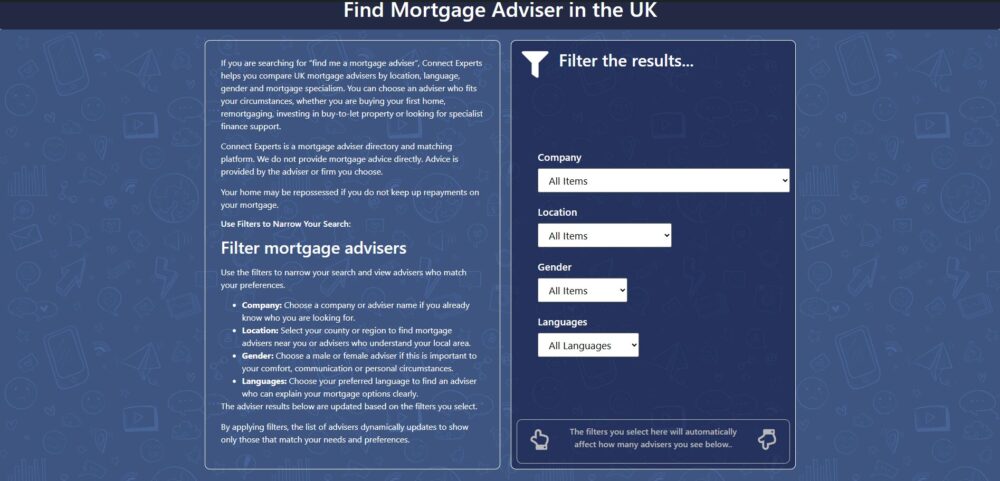
If you want to compare adviser options, you can search for first-time buyer mortgage advisers through Connect Experts.
FAQs
What is a new home mortgage?
A new home mortgage is a residential mortgage used to buy a property you plan to live in. The lender provides part of the purchase price, and the buyer repays the mortgage over an agreed term.
Is a Decision in Principle a mortgage offer?
No. A Decision in Principle is only an early indication of possible borrowing. A full mortgage offer depends on underwriting, documents, affordability checks and property assessment.
How much deposit did first-time buyers usually need in 2023?
Some first-time buyers could apply with a 5% deposit, subject to lender criteria. A larger deposit could improve product choice and reduce the loan-to-value.
Why are new-build mortgages different?
New-build purchases can involve reservation deadlines, exchange deadlines and uncertain completion dates. The mortgage offer must fit the build timetable.
Should I speak to a conveyancer before reserving a new-build home?
It is sensible to speak to a conveyancer early. New-build contracts can move quickly, and legal checks may involve planning, warranties, roads, sewers and service charges.
Can shared ownership help first-time buyers?
Shared ownership may help some buyers purchase a share of a home and pay rent on the rest. However, buyers should check rent, service charges, lease terms and future staircasing costs.
What extra costs should first-time buyers budget for?
First-time buyers should budget for legal fees, valuation fees, survey costs, Stamp Duty where applicable, moving costs, insurance, furnishings and possible service charges.