

Specialist Buy-to-Let Mortgages for Complex Landlords: A buy-to-let mortgage is not only about buying a rental property. It is about rent, risk, structure, lender criteria and long-term planning.
That is where specialist buy-to-let advice matters.
Some landlord cases fit standard lender rules. Others need a more detailed review because the property, borrower, income, ownership structure or portfolio is more complex.
At Connect Mortgages, we help landlords understand how specialist buy-to-let mortgages work, what lenders may assess, and which route may suit their property plans.
At a Glance
Specialist buy-to-let mortgages are designed for landlord cases that may not fit standard lender criteria.
This can include portfolio landlords, limited company landlords, HMO properties, mixed-use buildings, complex income streams, refurbishment plans, or unusual property types.
Lenders may review rental income, stress testing, loan-to-value ratio, property condition, ownership structure, landlord experience, and the wider portfolio.
The right mortgage route depends on the property, borrower, rental strategy, tax position and exit plan.
Connect Mortgages can help landlords compare suitable options and understand the risks before applying.
What Are Specialist Buy-to-Let Mortgages?
Specialist buy-to-let mortgages are mortgage products for landlords whose cases need more detailed underwriting.
A standard buy-to-let mortgage may work for a simple rental property owned by an individual landlord. However, many landlords now operate through more complex structures.
This may include limited companies, multiple properties, HMOs, semi-commercial buildings or properties needing refurbishment.
Specialist lending is not about making borrowing easier without checks. It is about finding lenders that understand the full picture.
A lender may still assess affordability, rental income, credit profile, property value, deposit, experience and future plans.
Why Buy-to-Let Cases Become Complex
A buy-to-let case can become complex for several reasons.
The borrower may own several mortgaged rental properties. The property may need work before it can be let. The landlord may be buying through a limited company. The rental income may need to pass a lender’s stress test.
The property itself can also create questions. HMOs, multi-unit blocks, mixed-use properties and non-standard construction may need a lender with suitable criteria.
In these cases, the cheapest rate may not be the right starting point. The first question should be whether the lender understands the case.
Key Technical Points Lenders May Review
Specialist buy-to-let lending is built around criteria. A lender may look at the case from several angles before making a decision.
- Rental income and expected market rent
- Interest cover ratio and stress testing
- Loan-to-value and deposit level
- Property type and valuation comments
- Landlord experience
- Ownership structure
- Personal income and liabilities
- Existing portfolio performance
- Credit history
- Exit route for short-term finance
- Tenancy type and property use
These details matter because lenders are not only assessing the property. They are assessing whether the borrowing appears sustainable.
Portfolio Landlords
A portfolio landlord usually needs a more detailed review than a landlord with one rental property.
Lenders may look at the whole portfolio, not just the property being purchased or refinanced. This can include rental income, mortgage balances, property values, ownership structure and background borrowing.
For landlords with several properties, a specialist review can help identify where the pressure points sit.
You can read more about this route on our buy-to-let portfolio mortgages page.
Limited Company Buy-to-Let
Many landlords buy property through a limited company or special purpose vehicle.
This can affect the mortgage process because the lender may review the company structure, directors, shareholders, deposits, personal guarantees and business activity.
A limited company route may suit some landlords, but it is not right for everyone. Mortgage advice should sit alongside qualified tax advice before the structure is chosen.
Our limited company buy-to-let mortgages page explains this area in more detail.
HMO Mortgages
An HMO mortgage is different from a standard buy-to-let mortgage.
The lender may consider the number of tenants, room layout, licensing position, property condition, valuation method and local demand. Some lenders also look closely at the landlord’s experience.
The property must work as an investment, but it must also work as a safe and suitable home for tenants.
For more detail, visit our guide to HMO mortgages.
Bridging Finance for Buy-to-Let Landlords
Some landlords use short-term finance when a standard mortgage is not suitable at the start.
This may apply when a property is bought at auction, needs refurbishment, has no working kitchen or bathroom, or cannot yet meet standard lender requirements.
Bridging finance is usually short-term. Therefore, the exit route matters.
The borrower may plan to sell the property, refinance onto a buy-to-let mortgage, or complete works before applying for longer-term lending.
You can explore this further on our bridging loan page.
Buy-to-Let Affordability and Rental Stress Testing
Buy-to-let affordability is usually linked to rental income.
Lenders may test whether the rent covers the mortgage payment at a notional interest rate. The calculation can vary by lender, product type, tax position and ownership structure.
This is why two lenders can reach different answers on the same property.
A calculator can help with early planning, although it should not replace advice. You can use our buy-to-let affordability calculator to estimate borrowing before speaking with an adviser.
Documents Landlords May Need
Specialist buy-to-let applications often need more evidence than standard cases.
A lender may request:
- Proof of income
- Bank statements
- Tenancy agreements
- Portfolio schedule
- Mortgage statements
- Company accounts
- SPV details
- Property valuation
- Refurbishment schedule
- Planning or licensing information
- Evidence of deposit
- Exit strategy for bridging finance
Preparing these details early can reduce delays. It can also help avoid unsuitable lender approaches.
What Connect Mortgages Does
Connect Mortgages helps landlords understand which mortgage route may suit their case.
This includes reviewing the property, ownership structure, rental position, deposit, borrowing level, portfolio and long-term aim.
The role of advice is not simply to find a product. It is to understand the shape of the case before the application is placed.
That matters because specialist lending is rarely about one detail. It is usually about how several details interact.
When Specialist Advice May Help
Specialist buy-to-let advice may help if:
- You own several rental properties.
- You are buying through a limited company.
- You are purchasing an HMO.
- You are refinancing a complex portfolio.
- You are buying a property that needs work.
- You need short-term finance before refinancing.
- Your income is self-employed or complex.
- The property has mixed residential and commercial use.
- A high-street lender has declined the case.
- You want to compare lender criteria before applying.
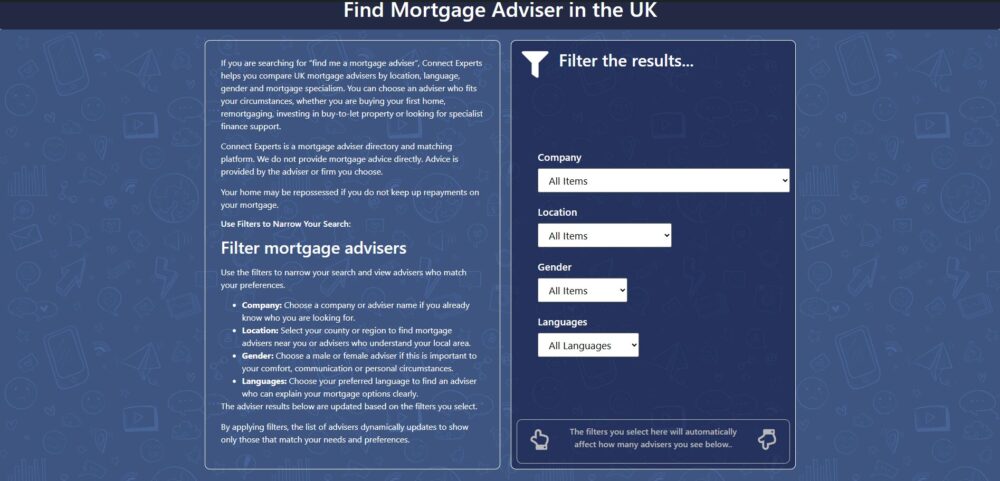
If you need to search by adviser expertise, Connect Experts can help you find a broker by expertise.
Speak to Connect Mortgages
Specialist buy-to-let lending rewards preparation.
The stronger the information, the clearer the route can become. The right adviser helps you see the case as a lender may see it, before the application is made.
That can save time, reduce confusion and support better long-term decisions.
If your landlord case does not fit a standard route, speak to Connect Mortgages about specialist buy-to-let mortgage options.
FAQs
What is a specialist buy-to-let mortgage?
A specialist buy-to-let mortgage is designed for landlord cases that need more detailed underwriting. This may include portfolio landlords, limited companies, HMOs, mixed-use properties or complex income.
Is specialist buy-to-let only for experienced landlords?
No. Some first-time landlords may also need specialist advice if the property or ownership structure is complex. However, some lenders may require landlord experience for certain property types.
Why do portfolio landlords need different mortgage advice?
Portfolio landlords may be assessed across their full rental portfolio. Lenders may review rental income, mortgage balances, property values and overall exposure.
Can I get a buy-to-let mortgage through a limited company?
Yes, some lenders offer limited company buy-to-let mortgages. The lender may review the company, directors, shareholders, deposit source and property plan.
Are HMO mortgages harder to arrange?
They can be more detailed because lenders may review licensing, tenant numbers, room layout, rental demand and landlord experience.
Can bridging finance help with a buy-to-let property?
Bridging finance may help when a property needs refurbishment, is bought at auction or cannot yet meet standard lender criteria. A clear exit strategy is essential.
Is buy-to-let affordability based on my income?
Buy-to-let affordability is often based mainly on rental income. However, some lenders may also consider personal income, tax position, liabilities and wider circumstances.
Should I speak to an accountant before buying through a company?
Yes. A mortgage adviser can explain mortgage options, but a qualified accountant or tax adviser should advise on tax structure.
Compliance, Risk and Responsible Borrowing
Specialist buy-to-let lending still requires careful assessment.
Lending is subject to status, affordability, valuation and lender criteria. Some buy-to-let mortgages are not regulated by the Financial Conduct Authority. Consumer buy-to-let, residential mortgages, and some other types of lending may be regulated.
Your adviser should explain the product, fees, risks, repayment method and any limitations before you proceed.
Your property may be repossessed if you do not keep up repayments on your mortgage or any loan secured on it.