

Understanding Mortgages: A Practical UK Guide – At a glance
A mortgage is a loan secured against property. You borrow money to buy, remortgage or raise funds against a home, then repay it over an agreed term.
The main points to understand are:
- How much you borrow
- The deposit or equity you have
- The interest rate and product type
- Whether the mortgage is repayment or interest-only
- How lenders assess affordability
- What fees and risks may apply
A mortgage is not only about getting a rate. It is about understanding the long-term promise behind the borrowing.
What Is A Mortgage?
A mortgage is a secured loan used to buy or refinance property. The property acts as security for the lender.
If you keep up the repayments, the mortgage continues as agreed. If you do not, your home may be repossessed.
Most UK residential mortgages are arranged over a set term. This is often around 25 years, although shorter and longer terms may be available. The term affects the monthly payment and the total interest paid over time.
A longer term may reduce monthly payments. However, it can also increase the total cost of borrowing. A shorter term may cost more each month, but the mortgage may be repaid faster.
That is why understanding mortgages matters. A small change in the rate, term, or deposit can affect the overall cost of the loan.
Why Understanding Mortgages Became More Important In 2023
This guide was first published in September 2023, during a period when many borrowers were paying closer attention to interest rates.
In September 2023, the Bank of England held Bank Rate at 5.25%. This followed a period of rising rates and placed more pressure on affordability checks, remortgage planning and monthly payment decisions.
For borrowers, the lesson was simple. A mortgage should not be judged only by the lowest headline rate. The full structure matters.
That includes product fees, repayment type, early repayment charges, affordability, loan-to-value and future plans.
How Mortgage Repayments Work
Most borrowers choose a repayment mortgage. This means each monthly payment covers part of the loan and part of the interest.
Over time, the amount owed should reduce. At the end of the term, the mortgage should be fully repaid if all payments are made.
An interest-only mortgage works differently. The monthly payment covers interest only. The original loan balance does not reduce unless you make separate repayments.
Interest-only can reduce monthly payments, but it carries greater repayment risk. The borrower needs a credible plan to repay the capital at the end of the term.
For many residential buyers, a repayment mortgage is the more common route. Interest-only may be considered in specific cases, subject to lender criteria and a clear repayment strategy.
Fixed, Variable and Tracker Rates
Mortgage rates usually fall into two broad categories: fixed and variable.
A fixed-rate mortgage keeps the interest rate the same for a set period. This may help with budgeting because the monthly payment is fixed for the duration of the period.
A variable-rate mortgage can change. This may include tracker rates, discount rates or a lender’s standard variable rate.
A tracker mortgage usually follows a base rate or another benchmark. If the benchmark changes, the mortgage rate may change too.
A fixed rate can offer certainty. A variable or tracker rate may offer flexibility, but payments can rise or fall.
The right option depends on the borrower’s income, risk tolerance, plans and need for payment stability.
Loan-to-Value Explained
Loan-to-value, often abbreviated as LTV, compares the mortgage amount to the property’s value.
For example, if you buy a property for £250,000 and borrow £200,000, the LTV is 80%.
A lower LTV usually means the borrower has more deposit or equity. This can reduce lender risk and may give access to more mortgage options.
A higher LTV may still be possible, but the lender may apply stricter checks. Rates may also differ.
Before applying, it can help to estimate borrowing costs and monthly payments using Connect Mortgages’ mortgage calculators.
How Lenders Assess Affordability
Mortgage affordability is not based only on income.
Lenders may review:
- Basic salary
- Overtime, bonus or commission
- Self-employed income
- Existing loans and credit cards
- Childcare costs
- Dependants
- Credit history
- Bank statements
- Property type
- Deposit source
Two borrowers with the same income may receive different outcomes. This is because lenders use different affordability models and criteria.
A lender will also consider whether the mortgage appears sustainable. This became especially important during 2023, when higher rates affected many household budgets.
For homebuyers who want a wider guide to residential borrowing, Connect Mortgages explains the core route on its residential mortgage page.
What First-Time Buyers Should Understand
First-time buyers often focus on the deposit first. That is important, but it is only one part of the decision.
A first-time buyer should also understand:
- How affordability is assessed
- What monthly payment feels realistic
- What extra costs may apply
- Whether the property meets lender criteria
- How credit history may affect options
- What happens after an offer is accepted
The first mortgage is often the point where financial confidence is tested. It is not only about buying a property. It is about learning how long-term borrowing works.
For a more focused route, see the Connect Mortgages guide to a first-time buyer mortgage.
What Remortgaging Means
Remortgaging means moving your mortgage to a new product or lender. Some borrowers do this when a fixed rate ends. Others remortgage to raise funds, change terms or review their current deal.
The key point is timing. Leaving a mortgage too late may limit options. Acting too early may trigger charges.
Borrowers should check:
- Current rate end date
- Early repayment charges
- Property value
- Current mortgage balance
- Income and credit position
- Product transfer options
- Full remortgage options
A remortgage is not always about changing lenders. Sometimes the best route may be staying with the current lender. The decision depends on the numbers and the borrower’s circumstances.
You can read more about this route on the Connect Mortgages remortgage page.
Self-Employed Borrowers
Self-employed borrowers can get mortgages, but income evidence may be reviewed differently.
A lender may ask for tax calculations, tax year overviews, account information, business bank statements, or accountant information. Requirements vary by lender and business structure.
Sole traders, limited company directors, contractors and partners may all be assessed differently.
The key issue is not whether someone is self-employed. It depends on whether the lender can clearly understand the income to assess affordability.
For a focused guide, see Connect Mortgages on self-employed mortgage brokers.
Why Advice Can Help
A mortgage adviser can help explain lender criteria, product structure, affordability, and the required documents before an application is submitted.
This may reduce the risk of applying to a lender that is not a good fit for the case. It may also help borrowers understand the difference between a low rate and a suitable mortgage.
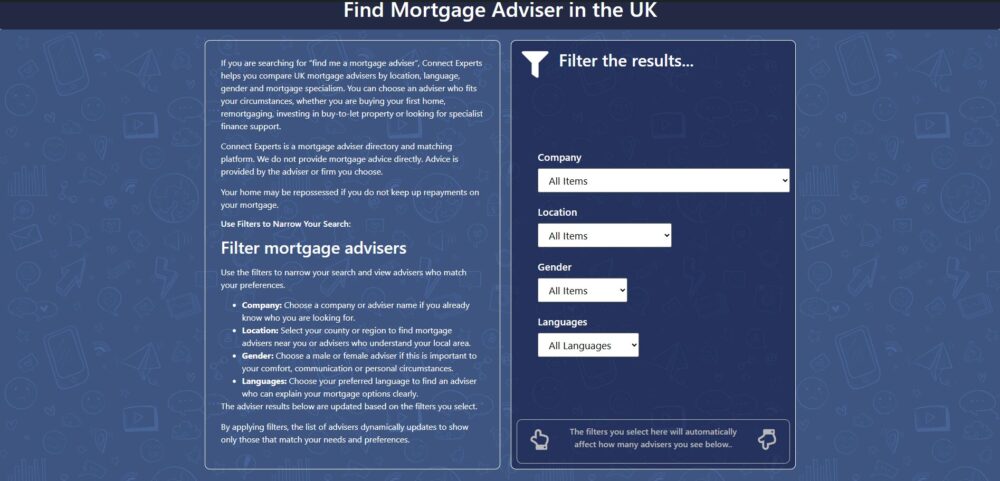
Some borrowers want to search by location, language or adviser type before making contact. Connect Experts, part of Connect Group, provides a way to find mortgage advisers across the UK.
Connect Experts is a mortgage adviser directory and matching platform. Advice is provided by the adviser or firm selected by the customer.
Key Questions Before Applying
Before applying for a mortgage, ask:
- How much can I borrow without stretching my budget?
- Do I want payment certainty or rate flexibility?
- What deposit or equity do I have?
- Are there product fees or early repayment charges?
- Is the mortgage repayment or interest-only?
- What evidence will the lender need?
- What could happen if income changes?
- Does the property meet lender criteria?
A mortgage is a legal and financial commitment. The best decisions are usually made before the application, not after the offer.
FAQs: Understanding Mortgages
What does understanding mortgages mean?
Understanding mortgages means knowing how borrowing, rates, repayments, affordability and lender criteria work before applying. It helps borrowers compare options more clearly.
What is the difference between a repayment mortgage and an interest-only mortgage?
A repayment mortgage reduces the loan balance over time. An interest-only mortgage only covers interest each month, so the borrower needs a separate plan to repay the capital.
Is a fixed-rate mortgage always better?
No. A fixed-rate mortgage can help with budgeting, but it may not suit every borrower. The right choice depends on income, plans, costs and attitude to payment changes.
What is loan-to-value?
Loan-to-value compares the mortgage amount with the property value. A £200,000 mortgage on a £250,000 property is 80% LTV.
Can self-employed people get mortgages?
Yes. Self-employed borrowers can get mortgages, subject to income evidence, affordability, credit history and lender criteria.
Why do mortgage lenders check affordability?
Lenders check affordability to assess whether the mortgage appears sustainable. They may review income, credit commitments, household costs and financial conduct.
Can my home be repossessed?
Yes. Your home may be repossessed if you do not keep up repayments on your mortgage or any loan secured against it.