
First-Time Buyer Mortgage Rates: What Affects Your Deal? Buying your first home is not only about finding the lowest mortgage rate.
A rate is a number, but a mortgage is a commitment. It affects your deposit, monthly budget, fees, future choices and peace of mind. In 2023, this mattered even more because mortgage pricing had changed quickly after a period of rising interest rates.
For first-time buyers, the right question is not simply, “What is the cheapest rate?”
A better question is, “Which mortgage deal works for my deposit, income, credit history and plans?”
At a Glance
First-time buyer mortgage rates are affected by your deposit, loan-to-value, credit history, income, property type, mortgage term and product choice.
In most cases, buyers with larger deposits may access lower rates. Buyers with smaller deposits, complex income or credit issues may face fewer lender options or higher pricing.
However, the lowest rate is not always the cheapest mortgage. Fees, incentives, early repayment charges and the length of the deal can change the total cost.
You can also read our wider First-Time Buyer Mortgage guide if you need help with deposits, documents and the buying process.
Why Mortgage Rates Felt Different for First-Time Buyers in 2023
This article was originally written in April 2023, when mortgage rates were higher than many buyers had expected.
By late March 2023, the Bank of England Bank Rate had risen to 4.25%. The Bank of England later reported that the effective rate on newly drawn mortgages reached 4.46% in April 2023.
That does not mean every first-time buyer paid the same rate. Mortgage pricing still depended on the borrower, the lender and the product.
However, it did mean that affordability became more important. A small change in rate could affect monthly payments, borrowing power and lender choice.
For first-time buyers, the lesson was clear. A mortgage rate should never be viewed in isolation.
What is a First-Time Buyer Mortgage Rate?
A first-time buyer mortgage rate is the interest charged by a lender when you borrow money to buy your first home.
The rate affects how much interest you pay each month. It also affects how much your mortgage costs over time.
Most first-time buyers use a repayment mortgage. This means each monthly payment covers interest and part of the loan balance. Over the mortgage term, the debt should reduce, provided all payments are made.
A mortgage rate may be:
- Fixed for a set period
- Linked to the Bank of England Bank Rate
- Linked to a lender’s own variable rate
- Discounted for an initial period
- Part of a product with fees or incentives
This is why two mortgages with similar headline rates may have different total costs.
How Loan-to-Value Affects First-Time Buyer Mortgage Rates
Loan-to-value, often called LTV, is one of the biggest rate factors.
LTV compares the mortgage amount with the property value.
For example, if you buy a £250,000 home with a £25,000 deposit, you need a £225,000 mortgage. That is a 90% LTV mortgage.
A lower LTV usually means the buyer has a larger deposit. This may reduce the lender’s risk and could give access to lower rates.
| Deposit | Mortgage share | Typical LTV |
|---|---|---|
| 5% deposit | 95% mortgage | 95% LTV |
| 10% deposit | 90% mortgage | 90% LTV |
| 15% deposit | 85% mortgage | 85% LTV |
| 25% deposit | 75% mortgage | 75% LTV |
This is why deposit planning matters. The difference between a 5% and 10% deposit can affect the products available.
However, a larger deposit should not leave you without money for fees, moving costs or emergencies.
Fixed Rates for First-Time Buyers
A fixed-rate mortgage keeps the interest rate the same for an agreed period.
This may be two, three, five or more years, depending on the product. During that fixed period, your monthly mortgage payment should stay the same.
Many first-time buyers like fixed rates because they support budgeting. This can be useful when moving from renting to homeownership.
A fixed rate may suit buyers who want payment certainty. However, it may come with early repayment charges if you repay or switch before the fixed period ends.
In 2023, fixed-rate mortgages were a key consideration because many buyers wanted stability during an uncertain rate environment.
Tracker Rates for First-Time Buyers
A tracker mortgage usually follows the Bank of England Bank Rate plus a set percentage.
For example, if a tracker is Bank Rate plus 1%, the mortgage rate moves when Bank Rate changes.
Tracker rates can sometimes look attractive when compared with fixed rates. However, the monthly payment can rise if the tracked rate increases.
This means a tracker may suit buyers who can manage payment changes. It may not suit buyers with a tight monthly budget.
First-time buyers should check:
- What the tracker follows
- How often the payment can change
- Whether there is an early repayment charge
- Whether there is a collar or minimum rate
- What the payment could become if rates rise
A lower starting rate is only useful if the future payment remains affordable.
Why the Lowest Rate May Not Be the Best Deal
The lowest headline rate is not always the best mortgage.
A mortgage with a lower rate may include a higher arrangement fee. Another product may have a slightly higher rate but lower upfront costs.
The right choice depends on the mortgage size, term and how long you expect to keep the product.
First-time buyers should compare:
- Interest rate
- Product fee
- Valuation fee
- Cashback
- Free legal work, where available
- Early repayment charges
- Overpayment options
- APRC
- Monthly payment
- Total cost during the deal period
This is where mortgage comparison becomes technical. A small rate difference can be less important than a large product fee.
What Is APRC?
APRC means annual percentage rate of charge.
It shows the overall yearly cost of a mortgage, including interest and certain charges. It is designed to help borrowers compare products.
However, APRC can be difficult to interpret because it may assume the mortgage continues beyond the initial deal period.
First-time buyers should still review APRC. Yet they should also compare the cost during the initial fixed or tracker period.
That is often the period the buyer is actively choosing.
How Deposit Size Can Change Your Rate
Deposit size can affect the mortgage rate because it changes the lender’s risk.
A buyer with a 5% deposit usually needs a higher LTV mortgage. A buyer with a 15% deposit usually needs a lower LTV mortgage.
Lower LTV bands may offer better pricing. They may also give access to more lenders.
However, waiting to save a larger deposit is not always the right answer. Property prices, rent, personal plans and mortgage conditions can change.
The practical approach is to compare both routes.
Ask:
- What rate could I get with my current deposit?
- What rate might I get with a larger deposit?
- How long would it take to save more?
- Would the monthly saving justify the delay?
- Would I still have money left after completion?
Good mortgage planning is not just about the rate. It is about the whole cost of buying.
How Credit History Affects First-Time Buyer Mortgage Rates
Credit history can affect lender choice and mortgage pricing.
Lenders may review missed payments, defaults, County Court Judgments, payday loan use, overdraft conduct and existing debts.
A clean credit file may help you access more lenders. Credit issues do not always stop a mortgage, but they can affect the deposit needed and the rate offered.
Before applying, first-time buyers should check their credit file and correct any errors.
They should also avoid making several full applications with different lenders. Too many hard searches may make the next application harder.
If your credit history is not perfect, you may find our Adverse Credit Mortgage page useful.
How Affordability Affects the Rate You Can Get
A lender does not only look at the property and deposit.
It also checks whether the mortgage appears affordable.
This may include:
- Basic salary
- Overtime
- Bonuses
- Commission
- Self-employed income
- Credit cards
- Loans
- Car finance
- Childcare
- Dependants
- Student loans
- Bank statements
Two lenders may assess the same buyer differently. This is why one lender may offer more borrowing than another.
In 2023, affordability was especially important because higher rates could reduce borrowing power.
You can use our Residential Affordability Calculator to get an initial estimate before speaking with an adviser.
What Other Costs Should First-Time Buyers Consider?
Mortgage rates are only one part of the cost.
First-time buyers may also need to budget for:
- Mortgage arrangement fees
- Valuation fees
- Solicitor fees
- Search fees
- Survey costs
- Stamp Duty, where payable
- Buildings insurance
- Contents insurance
- Moving costs
- Service charges, if buying leasehold
- Basic repairs and furniture
These costs can affect how much deposit you can safely use.
A buyer who spends every pound on the deposit may have little room for moving costs or early repairs.
You can use our Mortgage Calculator to test how different rates and loan amounts may affect monthly payments.
Should First-Time Buyers Choose a Two-Year or Five-Year Fixed Rate?
There is no single answer.
A two-year fixed rate may appeal to buyers who want shorter commitment. It may allow them to review the market sooner.
A five-year fixed rate may appeal to buyers who want longer payment certainty. It may also reduce the risk of needing to remortgage during a difficult market.
However, the right choice depends on:
- Your monthly budget
- Your future plans
- Early repayment charges
- Product fees
- Rate difference
- Likely time in the property
- Your attitude to risk
A first-time buyer planning to move again soon may think differently from someone buying a long-term home.
The right mortgage should fit the life around it.
Can First-Time Buyers Change Their Mortgage Rate Later?
Yes, many first-time buyers review their mortgage when the initial deal period ends.
This is often called remortgaging or product transfer, depending on the route used.
However, switching before the deal ends may trigger early repayment charges. It may also involve new affordability checks, legal work or valuation requirements.
First-time buyers should understand the end date of their mortgage deal from the start.
A mortgage is not only about getting approved. It is also about knowing what happens next.
How Can First-Time Buyers Improve Their Mortgage Rate Options?
First-time buyers may improve their options by preparing early.
Useful steps include:
- Saving the strongest deposit possible
- Checking credit files before applying
- Reducing unnecessary debts where possible
- Avoiding missed payments
- Keeping bank statements clear
- Gathering income documents early
- Understanding all buying costs
- Comparing total cost, not just rate
- Taking advice before submitting an application
Preparation does not guarantee a lower rate. However, it can reduce avoidable problems.
It can also help your adviser approach lenders that fit your circumstances.
When Should a First-Time Buyer Speak to a Mortgage Adviser?
Many buyers wait until they have found a property.
That can work, but earlier advice is often more useful.
A mortgage adviser may help you understand your deposit, likely borrowing range, lender criteria and possible product types before you make an offer.
This can help you view properties with clearer limits.
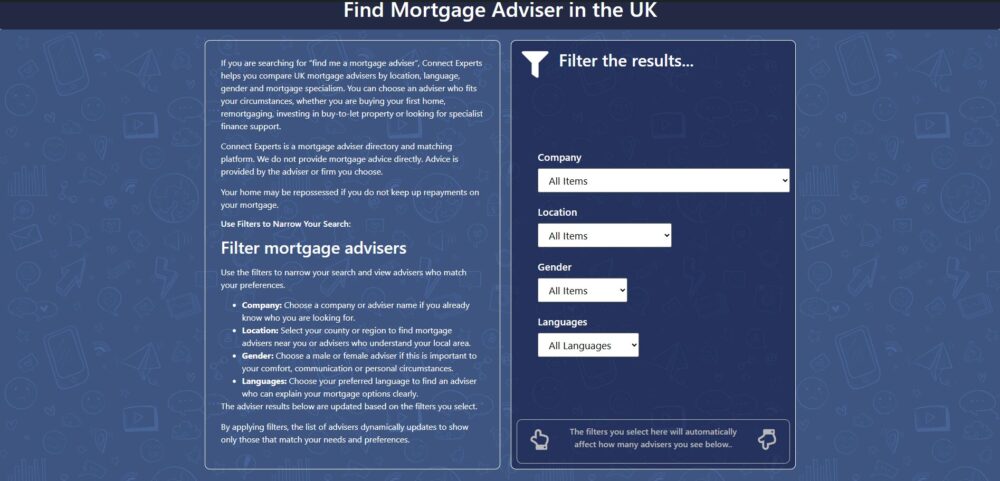
Some buyers also want to choose an adviser based on location, language or mortgage experience. You can search for first-time buyer mortgage advisers through Connect Experts.
Connect Experts is part of the Connect Group. It is a mortgage adviser directory and matching platform. Advice is provided by the adviser or firm you choose.
First-Time Buyer Mortgage Rates: What Should You Remember?
A first-time buyer mortgage rate is not just a percentage.
It is part of a wider decision that includes deposit, affordability, fees, lender criteria and future flexibility.
In a higher-rate market, the technical details matter more. A product that looks cheaper at first may not be cheaper overall.
The best starting point is to understand the numbers before making emotional decisions.
Your first home matters. So does the mortgage that helps you buy it.
What Next?
If you are buying your first home, start with the figures.
Check your deposit, estimate your monthly payment and understand which mortgage type may suit your plans.
Then speak with Connect Mortgages before making a full application.
FAQs: First-Time Buyer Mortgage Rates
What affects first-time buyer mortgage rates?
First-time buyer mortgage rates are affected by deposit size, LTV, credit history, income, mortgage type, product fees and lender criteria.
Do first-time buyers get better mortgage rates?
Not always. Some lenders offer products for first-time buyers, but the rate still depends on the borrower and the mortgage risk.
Is a 5% deposit enough for a first-time buyer mortgage?
A 5% deposit may be enough with some lenders, subject to affordability, credit checks and property criteria. A larger deposit may give access to more products.
Is a fixed rate better for a first-time buyer?
A fixed rate can help first-time buyers budget because payments stay the same during the fixed period. However, the right choice depends on cost, plans and risk.
Is a tracker mortgage risky for first-time buyers?
A tracker mortgage can rise or fall when the tracked rate changes. It may be risky if your budget cannot manage higher payments.
What is more important, rate or monthly payment?
Both matter. The rate affects the monthly payment, but fees, term and product features also affect the total cost.
Should first-time buyers use APRC to compare mortgages?
APRC can help, but it should not be the only measure. Buyers should also compare the total cost during the initial deal period.
Can I get a first-time buyer mortgage with bad credit?
It may be possible, but lender choice, deposit size and rates may be affected. Speak with an adviser before applying.